
Turkish Airlines Pet TravelTK
Get an email when new reviews or pet policy updates are posted for this airline.
Recently shared Turkish Airlines pet travel experiences
FAQ about Turkish Airlines pet policy
Policy last updated: April 19, 2026
In-Cabin Travel
AllowedOnly one carrier permitted in the cabin per passenger. Two pets of the same species accustomed to each other may share one cabin carrier if combined weight (animals + carrier) does not exceed 8 kg. Carrier must be soft-sided with ventilation holes of at least 2.5 cm diameter on at least three sides. Pet must remain in carrier under the seat in front at all times. Passengers restricted to window seats (excluding emergency exit and bassinet rows). Flat-faced/brachycephalic cats (Birman, Exotic, Persian, Himalayan, Burmese, Scottish Fold, British Shorthair, etc.) and dogs (Affenpinscher, Pekingese, Pug (all breeds), Shar Pei, Shih Tzu, Japanese Chin, Lhasa Apso, Tibetan Spaniel, Chow Chow, English Toy Spaniel, English Bulldog, French Bulldog, Boston Terrier, Boxer, Brussels Griffon, Bull Mastiff, English Mastiff, etc.) are permitted in cabin if they meet weight/dimension limits but cannot travel in the hold as AVIH. Sedated pets are not accepted. Pregnant pets not accepted. Pets must be clean, odor-free, and appear calm. Reservation must be confirmed at least 6 hours before flight. Interline fare for PETC (0–8 kg): +75 USD. Fees vary by route; use the Pet Transportation Fee Calculator on the Turkish Airlines website. On European flights, unvaccinated kittens/puppies under 3 months may be accepted in cabin if traveling with mother and have a Veterinary Health Certificate. On flights from Moldova to the US, only one carrier per passenger (max two animals of same species/siblings) is permitted.
Cargo / Hold
AllowedPets transported in the hold (AVIH) as checked baggage if carrier dimensions ≤75 cm height × 75 cm width × 125 cm length and total weight (pet + carrier) ≤50 kg. Hard-sided carriers required for hold transport; soft-sided carriers not accepted in the hold. Carrier must have lateral locking system. Brachycephalic cats and dogs with respiratory problems are NOT accepted as AVIH with passenger as of October 1, 2021; they may only travel in the hold via Turkish Cargo (AVI) if not suitable for cabin. Dangerous breeds (American Bulldog, Bandog, Tosa Inu, Caucasian Shepherd Dog, French Mastiff, Doberman and all Doberman breeds, Presa Canario, Rottweiler, Mastiffs (except Bullmastiff), Wolfhounds, Anatolian Shepherd Dog, Boerboel, and hybrids) may only be transported in the hold if accepted by Turkish Cargo. Pets over 50 kg or carriers exceeding hold dimensions transported via Turkish Cargo only. Water dispensers required for flights with layovers ≥4 hours or flight duration ≥8 hours; food must also be provided inside the carrier. Collar required for dogs in hold. Weight categories for AVIH: Light (0–23 kg), Medium (24–32 kg), Heavy (33 kg+). Interline fares: AVIH 0–23 kg: +150 USD; AVIH 24–32 kg: +150 USD; AVIH 33 kg+: +150 USD. Maximum of two pet carriers per passenger (excluding Turkish Cargo shipments); only one permitted in cabin. Pets not permitted on flights terminating in UK stations, including connecting flights. Two adult dogs of similar size accustomed to each other and/or same breed (each ≤14 kg) may share one hold carrier; two adult cats (each ≤10 kg) may share one hold carrier. Up to three kittens/puppies of the same litter aged 10–24 weeks may share one hold carrier. Pets weighing more than 14 kg must travel alone in carrier.
Service Animals
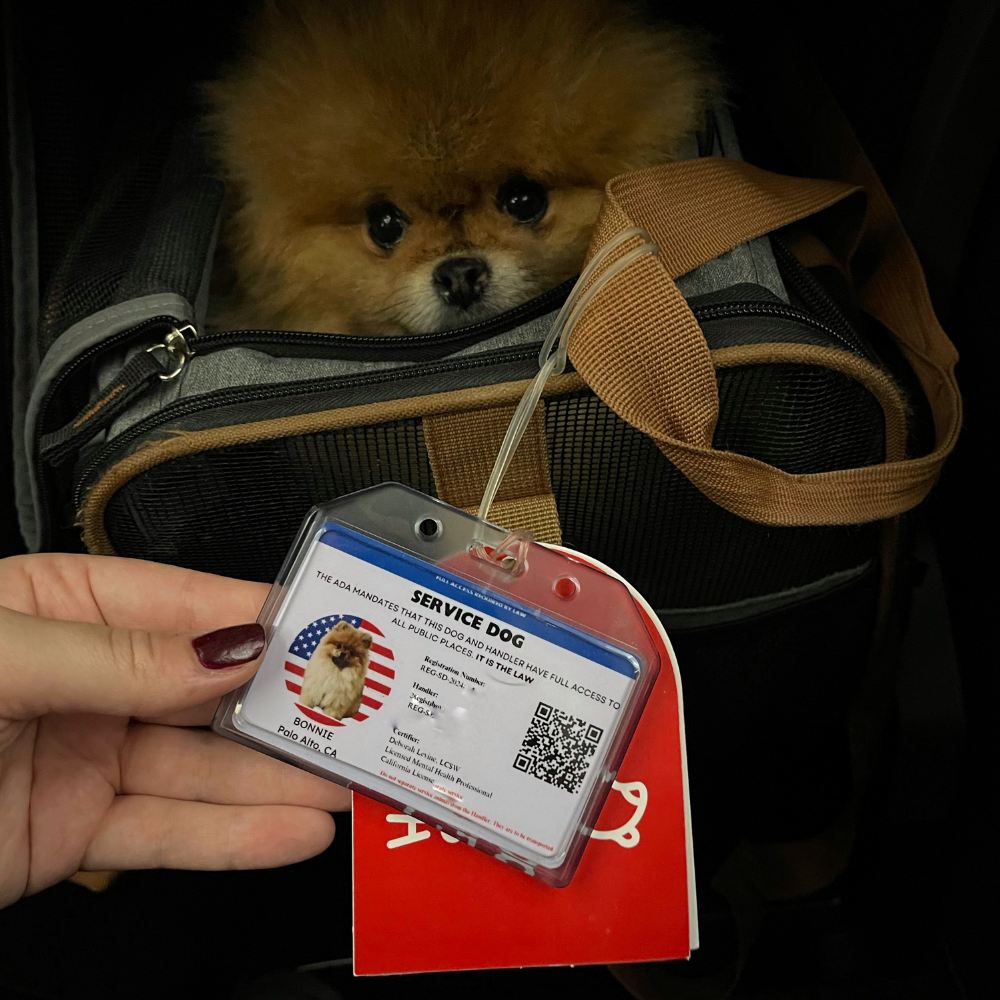
AllowedReservation confirmation required at least 48 hours before flight. Service dogs, guide dogs for visually/hearing impaired, and medical alert dogs travel free of charge in the cabin on all routes. On Istanbul–US flights, psychiatric service dogs (PSAN) are also transported free of charge; on connecting flights before/after these routes, dog must be caged and carried in cabin or hold for a fee (PETC/AVIH fee collected at first departure point). Service dogs must be professionally trained and certified. Dog must wear vest and/or identification collar; leash or harness attached to passenger's belt throughout flight. Dog must remain in front of passenger's feet; not permitted to sit in passenger seat. Muzzle must be kept available. Service animals on US flights are subject to new CDC rules (as of August 1, 2024) in addition to US DOT forms. Service dogs are exempt from seating restrictions except emergency exit rows and bassinet rows. Aggressive or disruptive behavior, poor grooming, or inability to fit in the foot space may result in denial or rebooking. Psychiatric Support Animals (PSAN) accepted only on Istanbul–US routes; on other connecting flights treated as regular pets. Search and rescue dogs transported free of charge in times of emergency/disaster and may travel in cabin during operations.
Species Rules
Cats and dogs are not permitted to travel on the same aircraft, even in different cabins. Dogs and birds can be transported in the same or different cabins. Cats and birds are also not permitted on the same aircraft.
Breed Restrictions
- Bull Terrier — not permitted on any Turkish Airlines flights
- Staffordshire Bull Terrier — not permitted on any Turkish Airlines flights
- American Pitbull Terrier — not permitted on any Turkish Airlines flights
- American Staffordshire Terrier — not permitted on any Turkish Airlines flights
- Pitbull Terrier — not permitted on any Turkish Airlines flights
- Japanese Tosa — not permitted on any Turkish Airlines flights
- Dogo Argentino — not permitted on any Turkish Airlines flights
- Fila Brasileiro — not permitted on any Turkish Airlines flights
- American Bully — not permitted on any Turkish Airlines flights
- Crossbreeds of the above — not permitted on any Turkish Airlines flights
- American Bulldog — hold only via Turkish Cargo
- Bandog — hold only via Turkish Cargo
- Tosa Inu — hold only via Turkish Cargo
- Caucasian Shepherd Dog (Caucasian Ovcharka) — hold only via Turkish Cargo
- French Mastiff (Dogue de Bordeaux) — hold only via Turkish Cargo
- Doberman Pinscher and all Doberman breeds — hold only via Turkish Cargo
- Presa Canario — hold only via Turkish Cargo
- Rottweiler — hold only via Turkish Cargo
- Mastiffs (except Bullmastiff/Bull Mastiff) — hold only via Turkish Cargo
- Wolfhounds / wolf-dog hybrids — hold only via Turkish Cargo
- Anatolian Shepherd Dog — hold only via Turkish Cargo
- Boerboel — hold only via Turkish Cargo
- Crossbreeds of the above 'hold only' breeds — hold only via Turkish Cargo
- Brachycephalic/flat-faced cats (Birman, Exotic, Persian, Himalayan, Burmese, Scottish Fold, British Shorthair, etc.) — cabin only (PETC); not accepted as AVIH with passenger
- Brachycephalic/flat-faced dogs (Affenpinscher, Pekingese, Pug (all breeds), Shar Pei, Shih Tzu, Japanese Chin, Lhasa Apso, Tibetan Spaniel, Chow Chow, English Toy Spaniel, English Bulldog, French Bulldog, Boston Terrier, Boxer, Brussels Griffon, Bull Mastiff, English Mastiff, etc.) — cabin only (PETC); not accepted as AVIH with passenger
Documentation Required
- Veterinary Health Certificate (issued by Ministry of Agriculture and Forestry of Republic of Türkiye for travel from Türkiye; for arrivals from outside Türkiye, issued and stamped by official veterinary authority of relevant country within last 48 hours)
- Pet Passport (containing animal's vaccinations and identification)
- Microchip documentation (ISO-standard microchip; required for cats and dogs; birds excluded)
- Rabies vaccination certificate (pets without rabies vaccination not permitted)
- Rabies Titration Test (for arrival/departure flights to/from Türkiye for cats and dogs)
- Import permit from destination country's authorities (where applicable)
- Certificate of Origin (for non-commercial entry into Republic of Türkiye for cats and dogs)
- CDC Dog Import Form (for dogs traveling to the United States)
- Reservation/documentation from CDC-approved animal care facility (for foreign-vaccinated dogs from high-risk rabies countries traveling to the US)
- What types of animals are permitted in the cabin?
- Only cats, dogs, and small songbirds (budgies/parakeets and canaries) are permitted to travel in the cabin.
- What is the maximum weight allowed for a pet in the cabin?
- The weight of the pet together with its carrier must not exceed 8 kg.
- What are the carrier size requirements for in-cabin pet travel?
- Carrier dimensions must not exceed 23 cm in height, 30 cm in width, and 40 cm in length. The carrier must be soft-sided with ventilation holes of at least 2.5 cm in diameter on at least three sides.
- Can pets travel in the cargo hold, and what are the requirements?
- Yes. Pets can travel in the aircraft hold (AVIH) if the carrier has a hard surface, does not exceed 75 cm height × 75 cm width × 125 cm length, and the total weight (pet + carrier) does not exceed 50 kg. Soft-sided carriers are not accepted in the hold. Carriers must have a lateral locking system. Brachycephalic cats and dogs with respiratory problems cannot be accepted as AVIH with the passenger as of October 1, 2021. If carriers/pets exceed the hold limits, transport must be arranged via Turkish Cargo.
- What are the fees for traveling with a pet?
- Pet transportation fees vary by route and weight category. For interline flights to/from Türkiye: PETC (0–8 kg) is +75 USD; AVIH (0–23 kg, 24–32 kg, and 33 kg+) are each +150 USD. For other routes, use the Pet Transportation Fee Calculator on the Turkish Airlines website. Fees are charged per carrier, not per animal. For stopover flights, fees are calculated per segment.
- Is there a limit on the number of pets per passenger or per flight?
- A maximum of two pet carriers per passenger are accepted on the aircraft (excluding Turkish Cargo shipments). Only one carrier may be carried in the cabin; the other must travel in the hold, or both may travel in the hold. The number of pets that can be carried on a plane varies depending on aircraft type. On flights from Moldova to the US, only one carrier per passenger is permitted (maximum two animals of same species/siblings in one carrier).
- Are there any breed restrictions for pets traveling in the cabin or cargo?
- Yes. Bull Terriers, Staffordshire Bull Terriers, American Pitbull Terriers, American Staffordshire Terriers, Pitbull Terriers, Japanese Tosas, Dogo Argentinos, Fila Brasileiros, American Bullies, and their crossbreeds are not permitted on any Turkish Airlines flights. American Bulldogs, Bandog, Tosa Inu, Caucasian Shepherd Dog, French Mastiff, Doberman breeds, Presa Canario, Rottweiler, Mastiffs (except Bullmastiff), Wolfhounds, Anatolian Shepherd Dog, Boerboel, and their hybrids may only be transported in the hold if accepted by Turkish Cargo. Brachycephalic/flat-faced cats and dogs are permitted in the cabin (PETC) if they meet weight and size limits, but cannot travel as AVIH with the passenger.
- What documents and health certificates are required to travel with a pet?
- Required documents include: a Veterinary Health Certificate (issued within 48 hours by an authorized veterinarian), a Pet Passport with vaccination records, microchip documentation (ISO standard; required for cats and dogs), a rabies vaccination certificate, and a Rabies Titration Test for flights to/from Türkiye. For dogs traveling to the US, a CDC Dog Import Form and, for dogs from high-risk rabies countries, documentation from a CDC-approved animal care facility are also required. Destination-country-specific documents may also be required.
- How do I book a flight for my pet, and can I do it online?
- You can make a reservation for your pet using your reservation code (PNR) on the Turkish Airlines website or mobile application, up to six hours before the flight. PSAN/SVAN reservations cannot be made through online channels. Even if a request is granted during booking, it may be denied at the airport.
- Are there special requirements for international travel with a pet?
- Yes. Destination country requirements must be met, including health certificates, microchipping, vaccination records, and import permits. Pets are not permitted on flights to the UK (including connecting flights) or to Bilbao, Spain. Dogs traveling to the US must comply with new CDC rules effective August 1, 2024, including microchip, rabies vaccination, and, for dogs from high-risk countries, reservation at a CDC-approved animal care facility. Dogs brought to Canada must belong to the passenger (no commercial transport from Türkiye and 100 other countries as of September 28, 2022).
- Are there temperature-related restrictions for pets traveling in the cargo hold?
- No specific temperature embargo is mentioned on the Turkish Airlines website for pets in the hold.
- What is the airline's policy on sedating pets during travel?
- Pets that have been given sedatives prior to the flight will not be accepted for travel.
- Is there a dedicated contact for pet travel inquiries?
- Passengers can contact Turkish Airlines offices and call center for pet-related inquiries. For US-bound dog travel, CDC-required documents must be submitted via the Turkish Airlines Feedback form under 'Pet travel request on US flights' in the 'Other' section.
Source: Official pet policy page ↗